
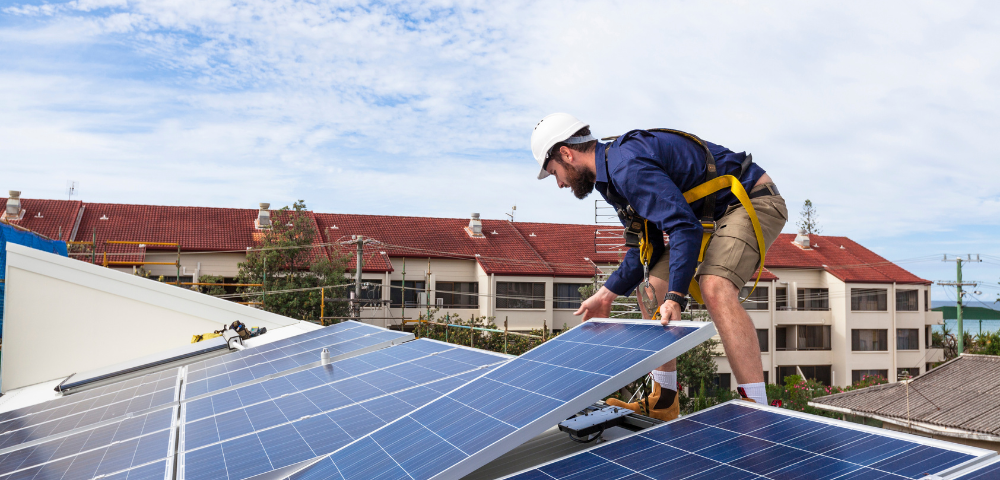
Thinking about going solar but wondering if your flat roof can handle it? Good news — it absolutely can! Installing solar panels on a flat roof is one of the smartest ways to turn unused space into a powerful energy source. With the right setup, you can capture maximum sunlight, reduce energy bills, and boost your property’s value — all while supporting a greener planet. In this guide, you’ll learn how to install flat roof solar panels efficiently, safely, and cost-effectively.
Choosing the Right Solar Panel System for a Flat Roof
Choosing the right solar panel system for a flat roof ensures both efficiency and long-term reliability. Each installation type offers unique advantages depending on your roof’s structure, local climate, and energy goals. Here’s a quick look at the main options and design factors to consider:
- Ballasted Systems: Weighted mounts that require no drilling, reducing roof damage and preventing leaks—perfect for most flat roof surfaces.
- Attached Systems: Secured with fasteners for maximum stability in windy or storm-prone regions.
- Hybrid Systems: Combine both designs, offering flexibility and resilience in mixed weather conditions.
- Panel Tilt: Typically set between 10°–15° to capture optimal sunlight throughout the day.
- Inverter Selection: Choose a high-efficiency inverter for smooth power conversion and improved energy output.
- Panel Orientation and Spacing: Proper alignment and distance between panels help avoid shading, ensuring consistent solar performance.
Step-by-Step Installation Guide
Site Check & Solar Evaluation
A certified solar installer inspects your flat roof system for strength, shading, and sunlight. This ensures your solar panels on a flat roof are safely positioned for maximum solar energy output.
Smart Layout Design
Experts plan the tilt angle and spacing so panels are installed at the optimal position. The layout ensures your flat roof solar systems get the most sunlight throughout the day.
Mounting the Racks
The mounting system is placed on the flat roof using ballasted racks, avoiding the need to drill into the roof. This protects the surface and supports secure solar panel installation.
Installing the Panels
Once racks are secured, PV panels are mounted and connected. Solar panel installers attach wiring carefully so the panels convert sunlight into electricity efficiently without harming your roof system.
Electrical Setup
Electricians link the solar panel system to inverters that transform DC into usable AC power. Proper grounding and connections ensure your solar installation delivers safe and steady solar power.
Testing & Final Inspection
Your solar installer tests every component, confirming the flat roof solar panel installation meets energy output and safety standards before activation. This ensures long-lasting performance and maximum efficiency.
Common Challenges and How to Solve Them
Installing solar panels on flat rooftops is highly effective, though certain challenges may occur. Water buildup is a frequent concern because level roofs often hold water. To stop this, make sure angled panels are set up at the best slant for water to flow off. Holes in the roof covering can occur when installing rooftop solar panel systems—use weight-based systems that hold solar panels safely without roof penetration. In places with a lot of wind, check if the weights have moved after big storms. Regular checking and cleaning help detect early damage, ensuring the level of rooftop solar setups stays steady, works well, and lasts a long time for your home solar panels.
Maintenance Tips for Flat Roof Solar Panels
- Clean your solar panels regularly.
- Inspect all wiring and electrical connections.
- Monitor the inverter output consistently.
- Check for debris or water accumulation after storms.
- Schedule annual professional inspections.
- Use energy monitoring systems for performance tracking.
Cost, Savings, and ROI: Is It Worth It?
Installing solar panels on a flat roof in Maine is not just about sustainability—it’s a smart financial move. With electricity rates climbing nearly 7% every year, CMP customers face rising costs, while those who invest in a flat roof solar installation lock in predictable energy expenses. Through a $0 down, 15-year bill swap, homeowners can install a solar PV system and replace their CMP payment with a lower, fixed solar payment. After the payoff period, your energy is nearly free. Most homeowners see a full ROI within 6–8 years and gain over $100,000 in lifetime savings. Plus, the 30% federal tax credit helps offset installation costs, making solar panels on flat roofs even more affordable. With guidance from Maine Energy Experts, you can maximize savings and ensure your system is optimized for Maine’s unique conditions.
Cost & Savings Comparison
| Category | CMP (Traditional Electricity) | Solar on Flat Roof |
| Upfront Cost | $0 (but rising bills) | $0 down financing |
| Monthly Payment | Increases ~7% annually | Fixed low payment for the best solar solutions. |
| System Payoff | Never | 15 years is a common lifespan for solar panels installed on a flat roof. |
| Lifetime Savings | $0 | $100,000+ |
| Tax Incentives | None | 30% Federal Tax Credit |
| Ownership | None | Full system ownership |
Conclusion
Whether you have a sloped roof, a pitched roof, or a flat roof installation, going solar is a smart investment. When you mount solar panels at the optimal angle, you maximize sunlight and energy savings. Flat roofs offer flexibility, making it easy to install a solar panel system that’s efficient, durable, and perfect for your home’s future energy needs.
Turn Your Flat Roof Into a Power Source
Maximize sunlight, reduce monthly bills, and increase your property’s value with a professionally installed flat roof solar system. Let our team guide you through every step—from evaluation to installation.
Request Expert Guidance