
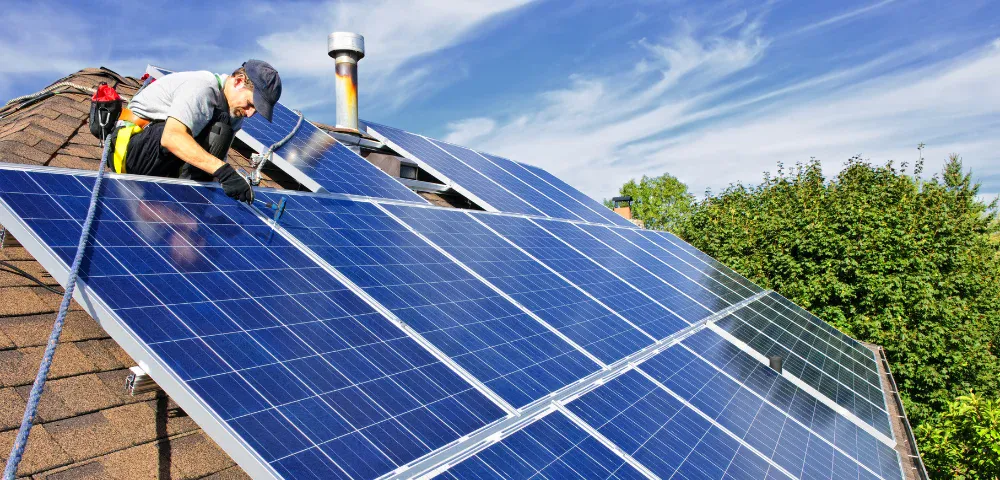
Solar panel positioning plays a key role in overall energy production. Even high-quality panels can underperform if installed incorrectly. Panel angle, direction, and roof placement directly affect solar output, especially in northern states like Maine with seasonal sunlight changes. Proper planning helps maximize efficiency and ensures consistent, year-round performance.
Key Factors That Affect Solar Panel Efficiency
Let’s explore the factors that impact the percentage of sunlight a solar panel can convert into usable electricity.
- Sun Path — Seasonal sun movement influences how panels receive sunlight during the year. In Maine, the low winter sun reduces exposure when panels are not positioned correctly.
- Geographic Latitude — Geographic latitude determines the ideal tilt angle for solar panels. Matching the panel angle to latitude helps maintain consistent sunlight exposure year-round.
- Roof Orientation — Roof orientation controls the direction solar panels face on a building. In the Northern Hemisphere, south-facing roofs deliver the strongest and most reliable sunlight.
- Roof Pitch — Roof pitch affects the natural tilt of installed solar panels. When the slope is unsuitable, mounting systems adjust angles to improve sunlight capture.
- Climate Conditions — Climate impacts solar output through temperature, snow, and cloud cover. Steeper panel angles reduce snow buildup and improve light exposure.
Best Direction for Solar Panels: How to Position Panels for Better Performance
One of the most common questions is: What’s the best direction for solar panels?
In most residential installations, south-facing panels work best because they receive the most consistent sunlight throughout the day.
Solar Panel Direction Comparison
| Direction Panels Face | Solar Production | Suitability in Maine | Performance Impact |
|---|---|---|---|
| South-facing panels | Highest | Best for solar | Panels will produce the most power |
| Southeast-facing panels | Very high | Good fit for solar | Slight reduction |
| Southwest-facing panels | Very high | Good fit for solar | Slight reduction |
| West-facing panels | Moderate | Acceptable | West-facing panels produce more electricity in the late afternoon |
| East-facing panels | Moderate | Acceptable | Morning-focused output |
| North-facing panels | Low | Not recommended | Panels receive minimal sunlight |
South-facing panels deliver the highest annual output. West-facing panels may be used when roofs limit placement and can support late-day energy use.
Best Angle for Solar Panels
The solar panel angle determines how directly sunlight hits the panel surface. Panels work best when installed at an angle that matches local conditions.
Optimal Angle Rule
Panels installed at an angle equal to your latitude generally provide the best year-round performance.
Ideal Angle for Maine
- Optimal tilt angle: 40°–45°
- A steeper angle improves winter solar energy production
- Helps panels shed snow efficiently
Angle varies slightly depending on roof pitch and mounting hardware, but a fixed tilt optimized for the location delivers reliable results.
Seasonal Performance and Angle Adjustments
Seasonal Impact on Solar Production: Summer offers longer daylight hours, allowing strong energy production even at lower tilt angles. Winter requires steeper angles to capture low-angle sunlight and reduce snow buildup.
Panel Tilt Considerations: Most residential solar panel systems use a fixed tilt. When panels are angled based on location, they perform reliably throughout the year without manual adjustments.
Solar Panel Placement: Roof vs Ground
Roof-Mounted Systems
Roof-mounted systems are the most common option for home solar panel installations. Performance depends on roof orientation, roof pitch, and shading. A south-facing roof allows optimal solar panel placement with minimal adjustment.
Ground-Mounted Systems
Ground-mounted panels provide flexibility in direction or angle. Panels can be positioned to optimize orientation and angle when roof conditions limit performance.
Both methods support a strong solar panel system when panels are placed correctly.
Shading and Placement Considerations
Shading directly impacts solar energy production. Even partial shading can reduce how well panels produce power. In Maine, long winter shadows make careful placement essential.
Panels should be placed where they receive unobstructed sunlight for most of the day. Trees, chimneys, and nearby structures should be evaluated before panels are installed to avoid long-term efficiency losses.
Common Solar Panel Positioning Mistakes
- Installing a solar power system without evaluating the direction or angle
- Assuming the roof pitch automatically provides the best solar panel angle
- Ignoring seasonal shading caused by trees, buildings, or structures
- Placing solar panels in areas where snow buildup remains longer
- Relying on general estimates instead of location-specific solar analysis
Avoiding these mistakes helps panels optimize performance and improve overall solar potential.
Role of a Solar Installer in Panel Positioning
A professional solar installer plays a critical role in ensuring solar panels are installed correctly and perform efficiently. Experts at Maine Energy Experts evaluate roof structure, shading, panel orientation, tilt angle, and the number of panels needed to meet specific energy goals.
During solar installation, installers determine how to point your solar panels, which direction panels should face, and how to adjust the panel tilt angle for maximum energy output. Solar design decisions also consider west-facing panel performance during peak demand hours and expected panel efficiency during winter months.
Expert planning ensures solar panels are installed efficiently, receive consistent sunlight, and deliver reliable long-term solar power for residential and commercial systems.
Conclusion
The importance of solar panel positioning cannot be overstated. Direction and angle directly impact your solar energy system’s performance. In Maine, south-facing panels installed at a tilt angle between 40° and 45° consistently deliver the best results. Whether roof-mounted or ground-mounted, correct solar panel placement ensures panels receive maximum sunlight and panels will produce reliable power year-round. By focusing on proper orientation, angle-based installation, and expert guidance, homeowners can maximize their solar energy production and build an efficient, long-lasting solar setup.
Optimize Solar Panel Performance
Work with solar professionals to design a system tailored to your location, roof structure, and energy goals.
Contact Us